Blatchford Engine Feature

Blatchford Propeller Engine Feature

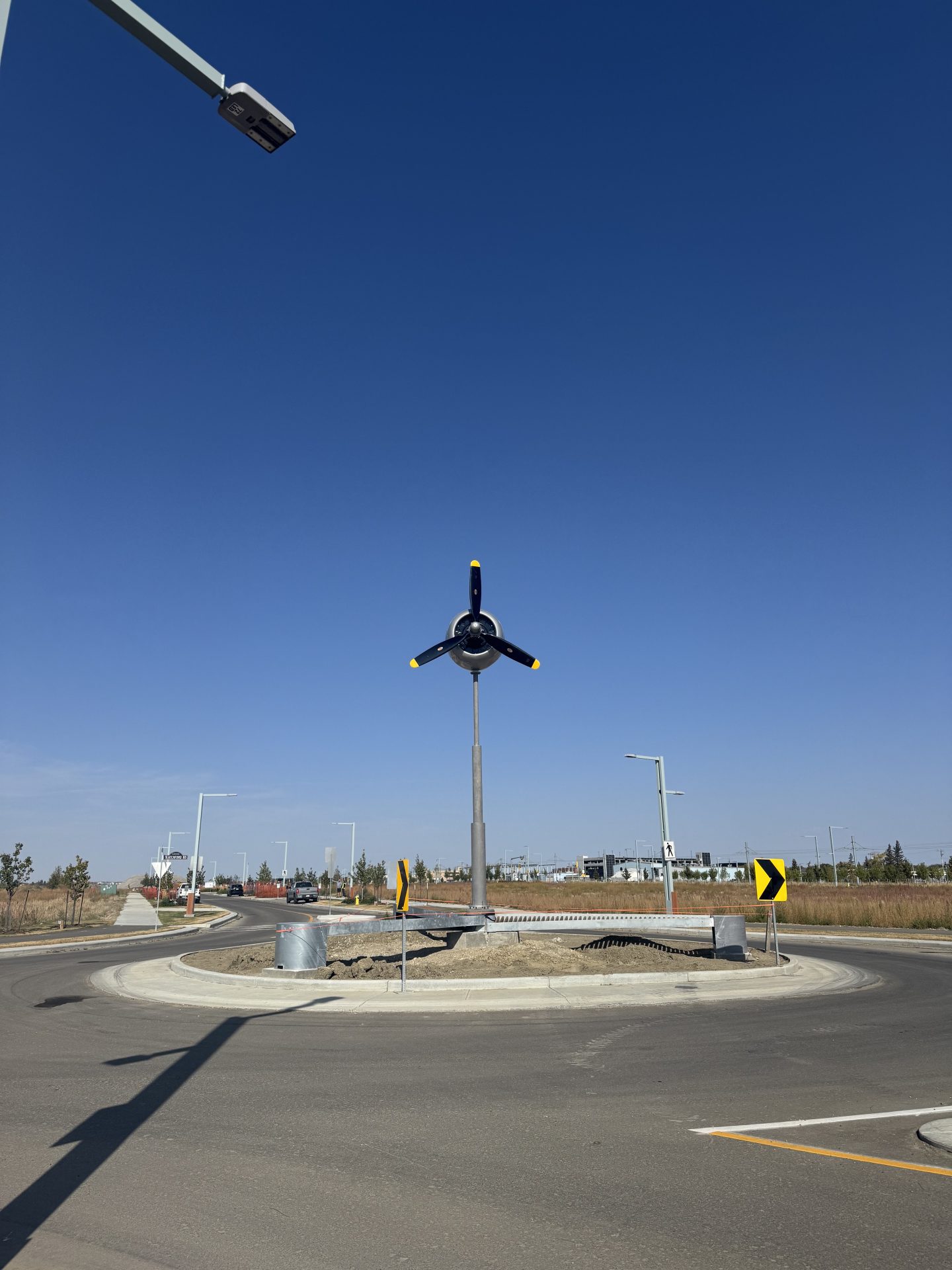
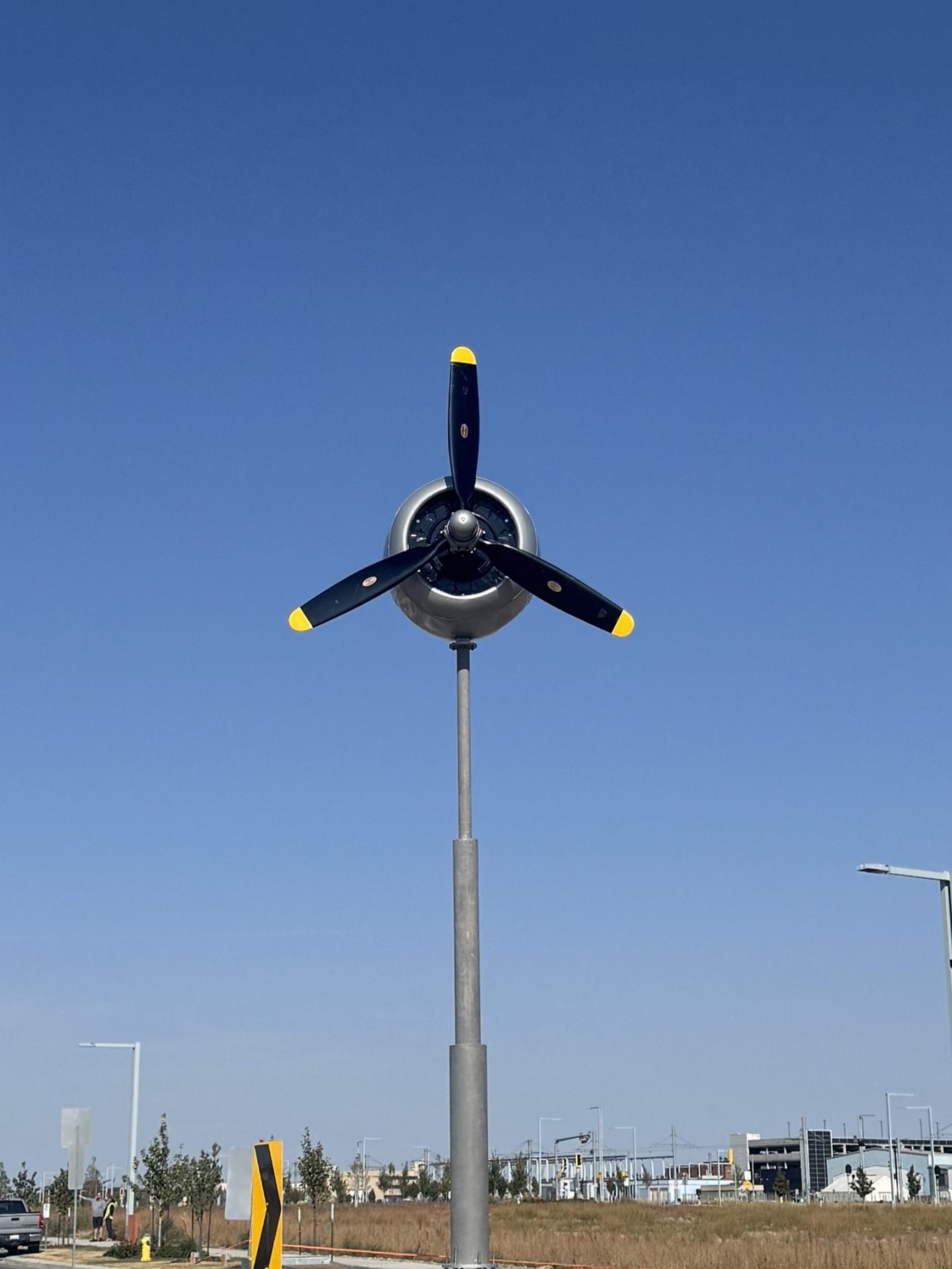
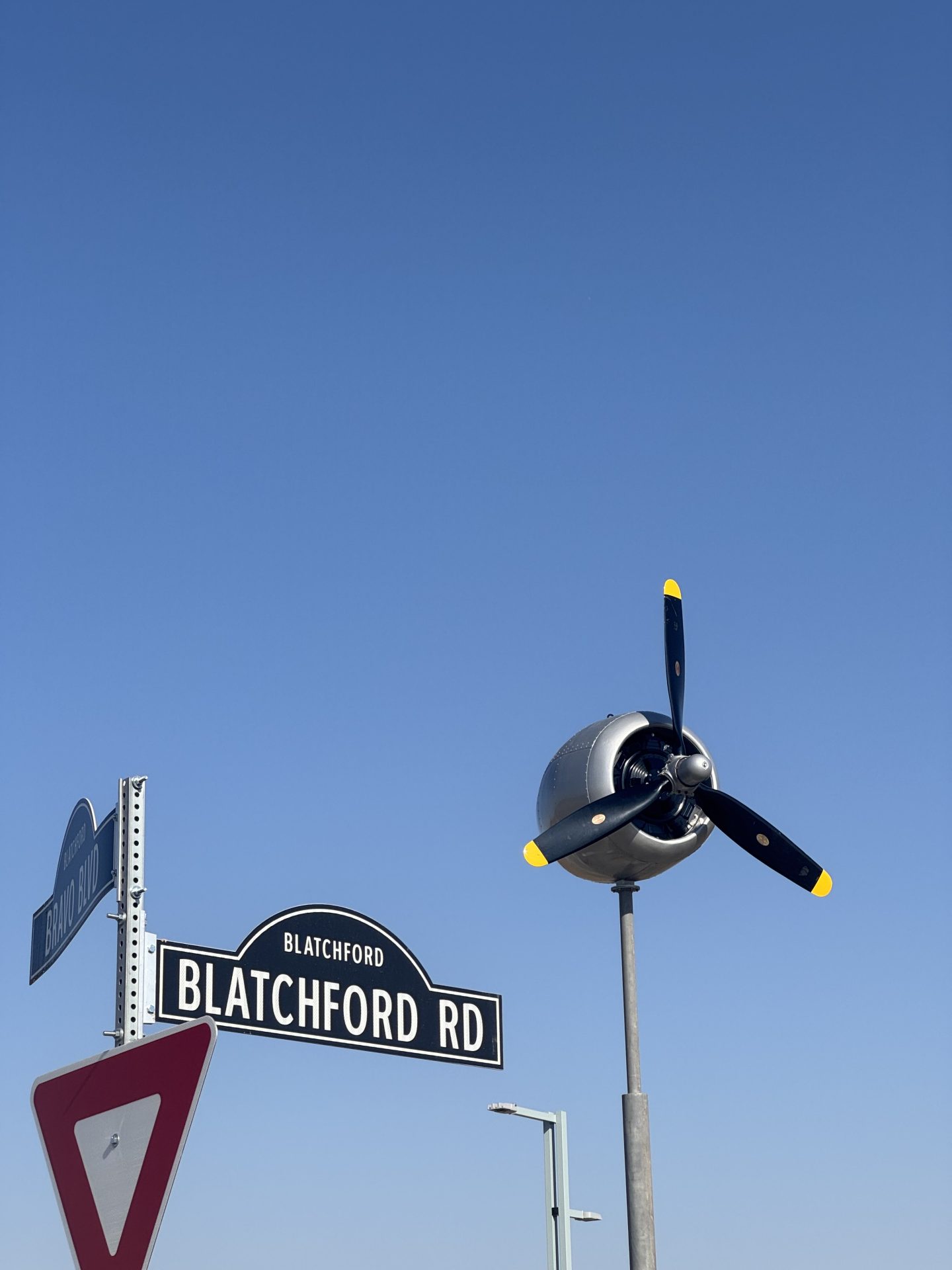
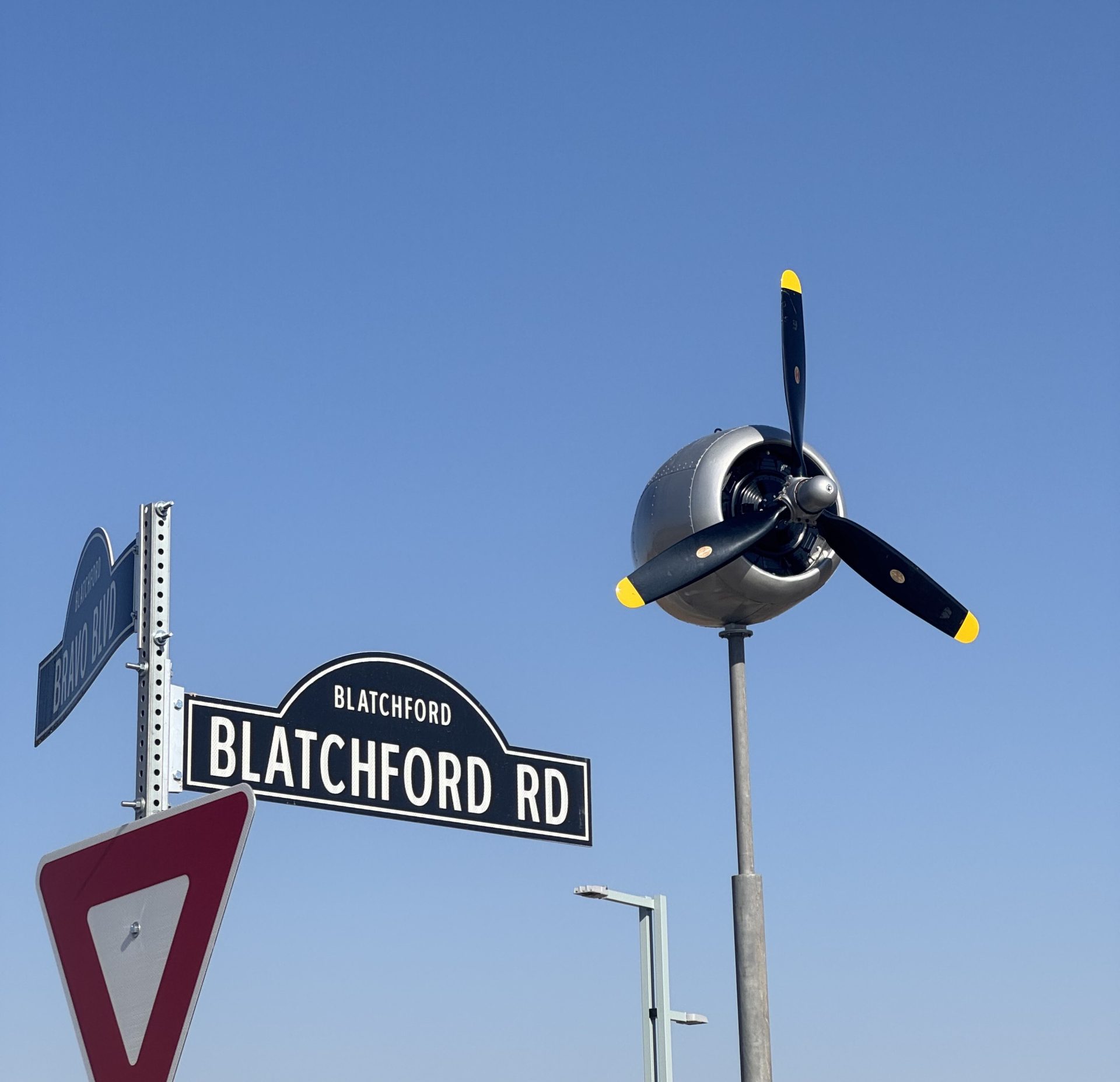
IMARK Architectural Metals fabricated a 26-foot-tall commemorative propeller and engine feature honoring the RCAF’s North American B-25D Mitchell II plane, installed adjacent to the Alberta Aviation Museum in Edmonton.

Project

Blatchford Propeller Engine Art Feature

Location

Blatchford Road and Bravo Blvd Roundabout

Edmonton, Alberta, Canada

Architect


Blatchford Propeller Engine Far

Project Background

The North American B-25D Mitchell II was a workhorse of the Second World War. The RCAF initially used the B-25D as a trainer, but began purchasing Mitchells from the Americans for Reserve Squadrons amidst worries of the threat of a Soviet invasion.  The aircraft was powered by Wright R-2600-29 Twin Cyclone 14-cylinder radial engines producing 1,267 kW.

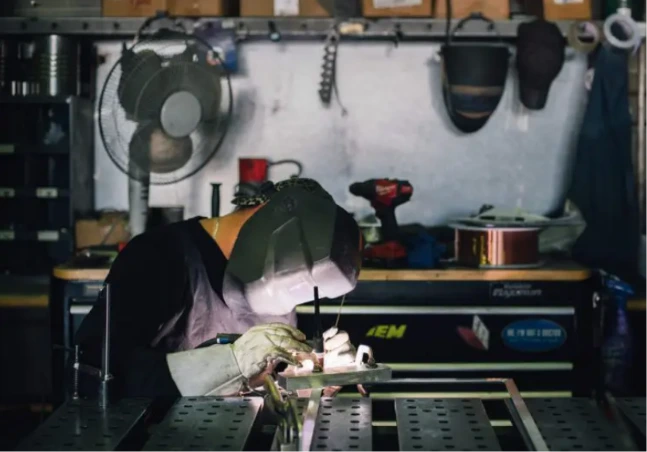
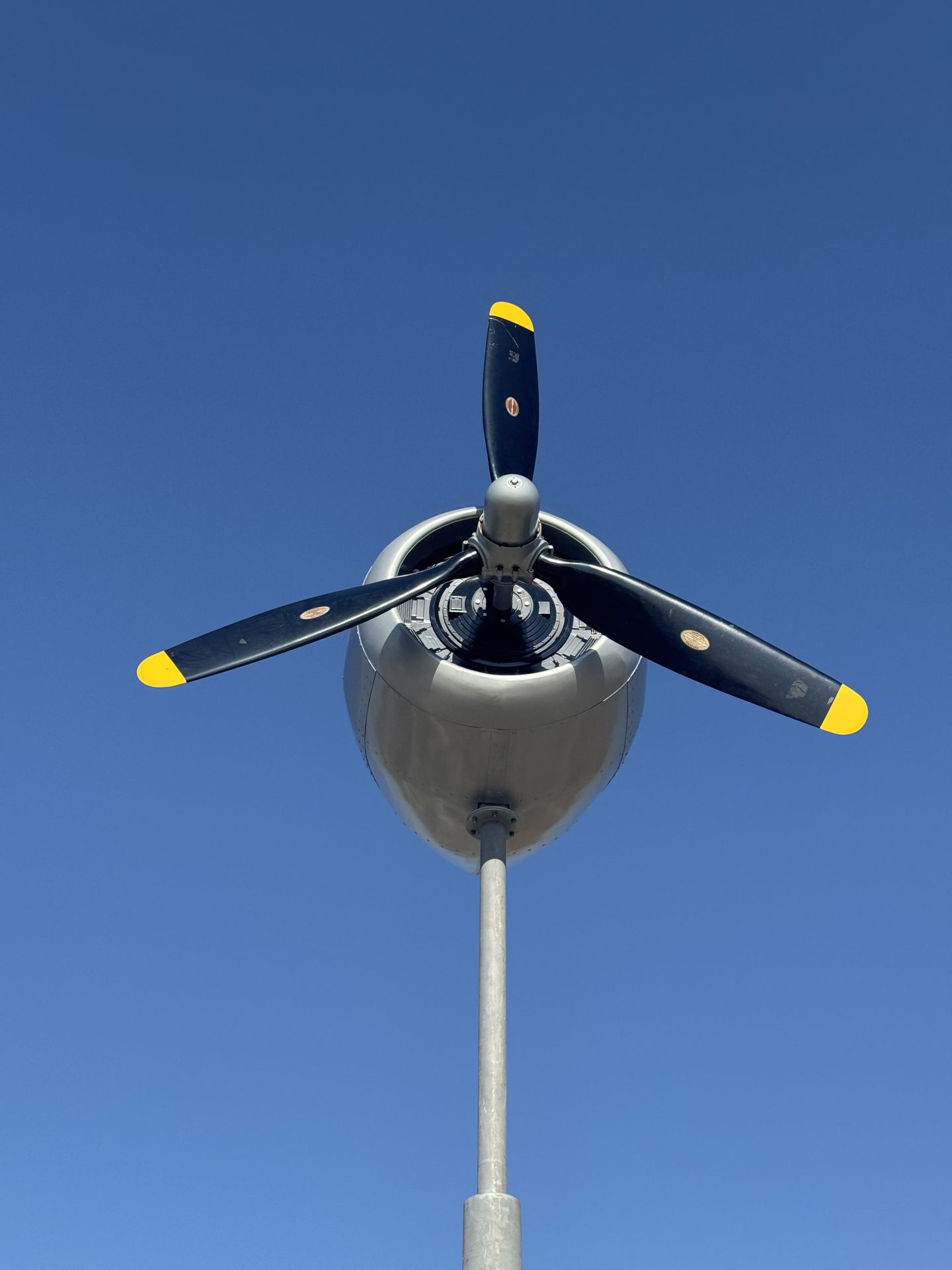
To ensure historical accuracy and recognizability, IMARK’s design team began with a full 3D scan of an original B-25D engine, capturing intricate geometries, curvature, and scale.  This digital model became the foundation for recreating the engine’s form in aluminum cladding and structural framing, while integrating an original propeller and nose cone procured from the Alberta Aviation Museum’s collection.

Placed directly beside the museum at Blatchford Field—the historic home of RCAF operations in Edmonton—the feature bridges aviation heritage with contemporary architectural metal craftsmanship.

Blatchford Propeller Engine Zoom

Project Highlights

  • Historical fidelity: Modeled after the Wright R-2600-29 Twin Cyclone radial engine used on the B-25D Mitchell II.
  • Original artifacts: Incorporates an authentic propeller and nose cone from the Alberta Aviation Museum’s collection.
  • Scale and presence: 26 feet overall height (20 feet to center of feature), with a 12-foot propeller sweep and 9-foot engine length.
  • Lightweight engineering: Aluminum frame (0.188″ sheet) and 3D-printed engine component veneers reduce total assembly mass to approximately 1,000 lbs.
  • Durability: Hot-dipped galvanized steel structural assembly with aluminum cladding fastened using aircraft-grade rivets for long-term weather resistance.
  • Site integration: Tapered column anchors to concrete pile; three galvanized blade-frame extensions at the base curve toward the roundabout edge to echo propeller motion (wood cladding by others).
Blatchford Propeller Engine

Project Approach

Digital Modeling and Design Intent

IMARK imported the 3D scan data into Autodesk Inventor to develop a fabricable interpretation of the engine.  The design prioritized three goals: immediate recognizability as an airplane engine from all angles, true-to-original scale, and constructability within shop, budget, and architectural constraints.

Structural Strategy

The engine’s aluminum frame uses a dual-slot, interlocking assembly inspired by wooden dinosaur skeleton models—laser-cut round frame pieces slide together to streamline fit-up and reduce weld time.  This frame bolts to a hot-dipped galvanized steel structural assembly that carries the load of the propeller and cladding.  The entire assembly mounts to a tapered column anchored to a concrete pile below grade.

Cladding and Finishing

Due to the complex curvature of the radial engine, aluminum sheet cladding is hand-formed to match the frame, then fastened with aluminum aircraft rivets for a clean, aviation-inspired finish.  Engine internals are represented by 4–5 inch 3D-printed veneers in a durable, weather-resistant material—selected for lightweight performance, geometric complexity, and cost efficiency.

Coordination and Installation

The propeller is fixed in position. At the column base, IMARK fabricated three galvanized frames that extend toward the roundabout perimeter, curved to mimic propeller blade sweep; wood cladding will be applied by others to complete the visual narrative.
Have a project in mind?

Talk to an expert.

Contact our team to learn more about our process or arrange an estimate.

Get A Quote